
Editorial de la revista número 4 del año 2016
Barra lateral del artículo
Contenido principal del artículo
Resumen
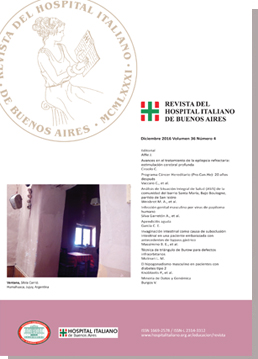
El Programa de Cáncer Hereditario cumplió 20 años. Carlos Vaccaro y María L. González hacen una reseña histórica de este programa institucional interdisciplinario de prevención y tratamiento de las formas hereditarias de cáncer creado oficialmente en 1996.
En mayo de 2016, por primera vez en Latinoamérica, se realizó el implante de un estimulador en el núcleo anterior del tálamo en un paciente con epilepsia focal temporal mesial bilateral resistente al tratamiento médico. Carlos Ciraolo explica el procedimiento de estimulación cerebral profunda a través de electrodos que, ubicados en la región de inicio o en áreas relacionadas con su propagación, permite reducir la frecuencia de las crisis en pacientes con epilepsia refractaria.
Mariela Alejandra Weisbrot presenta los resultados de una encuesta domiciliaria aleatoria, realizada en el barrio Santa María del partido de San Isidro, que indaga las necesidades de salud en la comunidad.
El virus del papiloma humano (VPH) es una de las enfermedades de transmisión sexual más comunes. Alejandro Silva Garretón revisa el diagnóstico, las opciones de tratamiento y la prevención de la infección genital masculina por virus de papiloma humano.
Creciente evidencia apoya el tratamiento de la apendicitis aguda no complicada con antibióticos. A partir de un caso de apendicitis aguda resuelta con tratamiento antibiótico, Carlos E. García discute esta opción terapéutica.
La invaginación intestinal es una causa infrecuente de obstrucción intestinal en el adulto, y en embarazadas es excepcional. Brenda Estefanía Massimino nos muestra la tomografía computarizada de una mujer embarazada complicada con invaginación yeyuno-yeyunal.
La sección Hospital Italiano en Medline incluye el comentario de dos publicaciones. Leisa M. Molinari destaca el menor riesgo de ectropión utilizando la técnica del triángulo de Burow para el cierre de defectos que involucran el área infraorbitaria.
Los pacientes con diabetes tipo 2 tienen mayor prevalencia de hipogonadismo que los pacientes no diabéticos. Pablo Knoblovits y Pablo R. Costanzo analizan los mecanismos involucrados en la disminución del nivel de andrógenos en pacientes con diabetes tipo 2.
El rápido y eficaz procesamiento de cantidades masivas de datos computarizados con información de pacientes permite descubrir patrones o asociaciones relevantes, no evidentes con los métodos de análisis tradicionales. Valeria Burgos, del Laboratorio de Aprendizaje Biológico y Artificial, nos introduce en el proceso de la Minería de Datos aplicada a la medicina genómica.
Downloads
Detalles del artículo
Sección

Esta obra está bajo una licencia internacional Creative Commons Atribución-NoComercial-CompartirIgual 4.0.